
Thymogen Alpha 1
Thymogen Alpha 1 is a bioregulatory peptide derived from the thymus gland — the master organ of immune education and T-cell development. As a synthetic analog closely related to Thymosin Alpha-1, Thymogen Alpha 1 supports the body's immune architecture at a fundamental level, helping to activate, regulate, and sustain robust immune function. For those seeking to optimize their immune health with cutting-edge peptide science, Thymogen Alpha 1 represents one of the most targeted and research-supported options available.

Thymogen Alpha-1 is an immune-support bioregulator for those seeking stronger daily defenses, faster recovery from illness, and resilient year-round vitality—ideal for frequent travelers, high performers, or anyone prioritizing immune longevity.
Boosts T-cell activity, strengthening the body’s defense mechanisms.
Assists in combating viral infections by enhancing immune responses.
Helps in modulating inflammatory processes within the body.
What the science says
Research & Resources
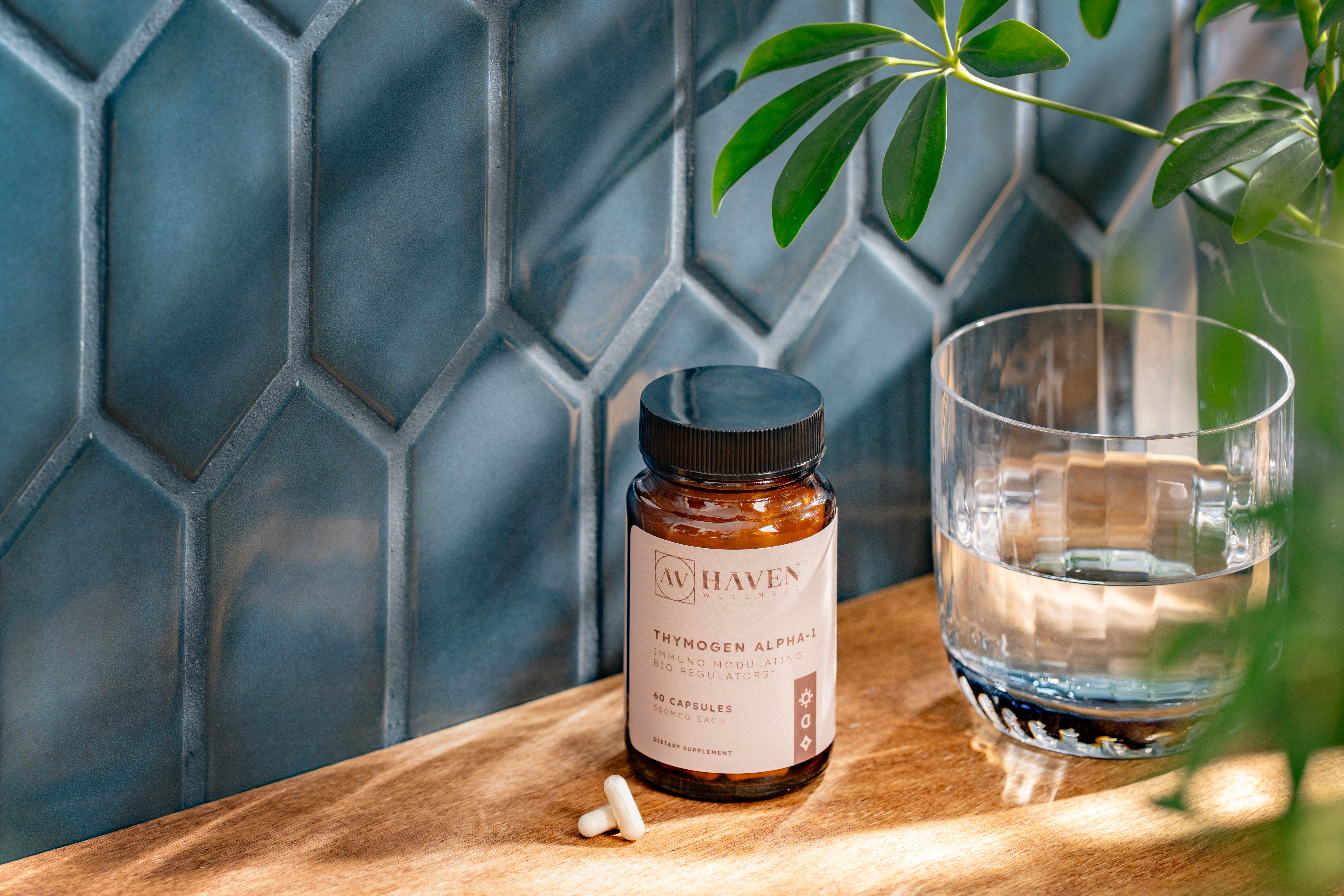
What is Thymogen Alpha 1?
Thymogen Alpha 1 is a bioregulatory peptide derived from the thymus gland — the master organ of immune education and T-cell development. As a synthetic analog closely related to Thymosin Alpha-1, Thymogen Alpha 1 supports the body's immune architecture at a fundamental level, helping to activate, regulate, and sustain robust immune function. For those seeking to optimize their immune health with cutting-edge peptide science, Thymogen Alpha 1 represents one of the most targeted and research-supported options available.
The thymus gland sits just behind the sternum and serves as the training ground for T-lymphocytes (T-cells) — the immune system's specialized soldiers responsible for identifying and eliminating threats including viruses, bacteria, and abnormal cells. During childhood and early adulthood, the thymus is highly active. However, beginning in the mid-20s, the thymus undergoes a process called involution — gradually shrinking and producing fewer T-cells with each passing decade.
This age-related thymic decline is directly associated with the immune senescence we observe in older adults: reduced vaccine response, slower recovery from infection, increased susceptibility to illness, and declining cancer immunosurveillance. Thymogen Alpha 1 may help support thymic function and T-cell activation, offering a peptide-based approach to counteracting this decline.
Research suggests Thymogen Alpha 1 works through several immunological mechanisms:
- T-Cell Activation: Studies indicate Thymogen Alpha 1 may stimulate the maturation and proliferation of T-lymphocytes, including both CD4+ helper T-cells and CD8+ cytotoxic T-cells
- Enhanced Cytokine Production: Research suggests it may upregulate the production of key immune signaling molecules including interferons and interleukins that coordinate immune responses
- NK Cell Support: Some studies indicate Thymogen Alpha 1 may enhance natural killer (NK) cell activity, which is critical for rapid immune defense against viral infections and tumor cells
- Dendritic Cell Optimization: Research suggests improved antigen presentation, helping the immune system more effectively recognize and respond to novel threats
- Immune Regulation: Beyond activation, Thymogen Alpha 1 may also support regulatory T-cell function, helping to prevent autoimmune overreaction
Thymosin Alpha-1 (the closely related compound from which Thymogen is derived) has been extensively studied for its antiviral properties and is actually an approved medication in several countries for the treatment of hepatitis B and C, as well as an immune adjuvant for cancer patients. Research suggests these effects include:
- Direct stimulation of interferon-gamma production, a critical antiviral signaling molecule
- Enhancement of toll-like receptor (TLR) expression, improving pathogen recognition
- Restoration of immune function in immunocompromised individuals
- Improved vaccine response rates in elderly and immunocompromised populations
Immunosenescence — the gradual deterioration of immune function with age — is one of the most significant drivers of age-related disease and vulnerability. As the thymus involutes and T-cell output declines, the immune system becomes both less responsive to new threats and more prone to chronic low-grade inflammation (a state sometimes called "inflammaging").
Research on thymic peptides like Thymogen Alpha 1 suggests they may help restore more youthful immune profiles in aging individuals, potentially improving T-cell diversity, reducing inflammatory markers, and supporting overall immune resilience.
The immune system's ability to identify and eliminate abnormal cells — a process called immunosurveillance — is critically dependent on robust T-cell and NK cell function. Research on Thymosin Alpha-1 has explored its potential role in supporting cancer immunotherapy by enhancing the immune response against tumor cells. While this research is ongoing and Thymogen Alpha 1 is not a cancer treatment, the underlying immunological mechanisms are consistent with supporting the body's natural defense architecture.
Our Thymogen Alpha 1 is formulated for consistent, bioavailable oral delivery. At $135, it represents an accessible entry point into peptide-based immune optimization backed by decades of international research.
These statements have not been evaluated by the Food and Drug Administration. This product is not intended to diagnose, treat, cure, or prevent any disease.


