
KPV
KPV is a tripeptide composed of lysine, proline, and valine — three amino acids that form the active C-terminal fragment of alpha-melanocyte-stimulating hormone (alpha-MSH). Despite its small size, KPV carries remarkable biological activity, particularly in the realm of gut health, inflammation regulation, and wound healing. At Haven Wellness, KPV is one of our most targeted formulations for individuals seeking to support digestive wellness and mucosal integrity.

KPV is an anti-inflammatory bioregulator for those seeking gut calm, skin clarity, and whole-body recovery—ideal for athletes, people managing chronic inflammation, or anyone pursuing foundational digestive wellness.
Effectively reduces inflammation in conditions like IBD, Crohn’s disease, and ulcerative colitis.
Promotes healing of the intestinal lining, aiding in digestive balance.
Combats harmful microbes, enhancing the body’s defense mechanisms.
What the science says
Research & Resources
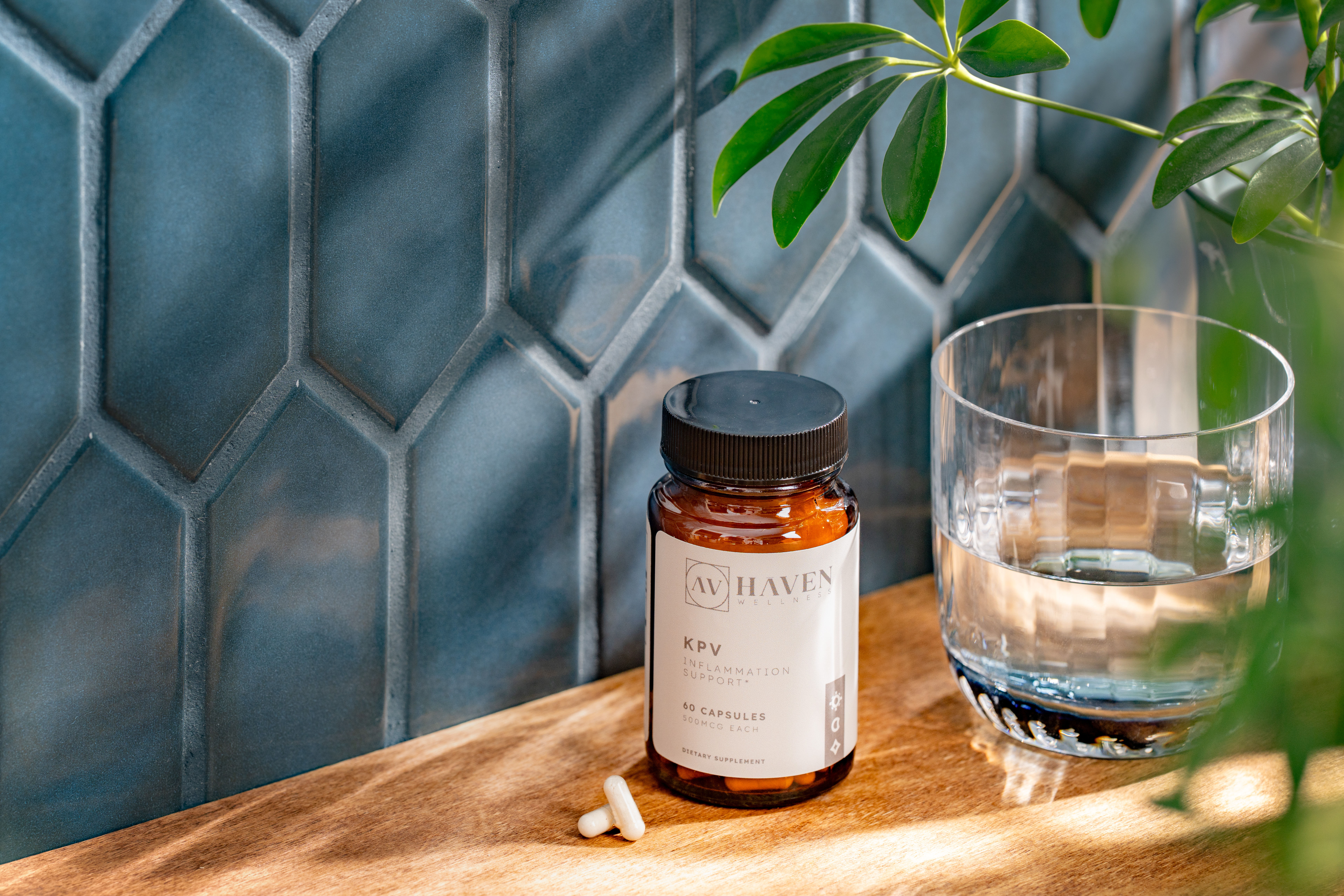
What is KPV?
KPV is a tripeptide composed of lysine, proline, and valine — three amino acids that form the active C-terminal fragment of alpha-melanocyte-stimulating hormone (alpha-MSH). Despite its small size, KPV carries remarkable biological activity, particularly in the realm of gut health, inflammation regulation, and wound healing. At Haven Wellness, KPV is one of our most targeted formulations for individuals seeking to support digestive wellness and mucosal integrity.
Alpha-MSH is a naturally occurring peptide hormone that plays a central role in the body's melanocortin system — a signaling network involved in energy balance, inflammation, and immune function. KPV represents the last three amino acids of alpha-MSH and retains much of the parent molecule's anti-inflammatory potency. Research suggests that by binding to melanocortin receptors (particularly MC1R and MC3R), KPV can exert powerful modulatory effects on immune and inflammatory responses — especially in gastrointestinal tissue.
One of KPV's most studied properties is its ability to inhibit pro-inflammatory pathways. Research suggests KPV may:
- Inhibit NF-kB activation — a master regulator of inflammatory gene expression
- Reduce production of pro-inflammatory cytokines including TNF-alpha, IL-6, and IL-1beta
- Modulate immune cell activity in the gut-associated lymphoid tissue (GALT)
- Support a balanced inflammatory response without broadly suppressing immune function
This targeted, receptor-mediated anti-inflammatory action makes KPV particularly interesting for gut health applications, where chronic low-grade inflammation is a common underlying factor in many digestive complaints.
Research on KPV has shown particular promise in the context of inflammatory bowel conditions. Studies indicate that KPV may help support the integrity of the intestinal epithelial barrier — the single-cell layer that separates the gut lumen from the bloodstream. A compromised gut barrier ("leaky gut") is associated with systemic inflammation and a range of health challenges.
Preclinical studies have demonstrated that KPV administration may reduce colitis severity, support mucosal healing, and decrease inflammatory infiltration in the gut lining. These findings have generated significant interest for its potential role in supporting those with IBD, Crohn's disease markers, and related conditions — though KPV is not a treatment for any of these conditions.
KPV's healing properties extend beyond the gut. Research suggests it may accelerate wound closure by:
- Promoting keratinocyte and fibroblast migration to wound sites
- Reducing local inflammation that can impede healing
- Supporting collagen synthesis and tissue remodeling
- Potentially reducing scar formation through modulated inflammatory signaling
Interestingly, research has also identified antimicrobial properties in alpha-MSH-derived peptides including KPV. Studies suggest KPV may help inhibit the growth of certain pathogenic microorganisms, potentially contributing to a healthier gut microbiome environment and reduced risk of microbial overgrowth-related inflammation.
KPV has been studied across multiple delivery routes. Its small tripeptide structure allows for effective oral delivery, as it can survive partial GI digestion and interact directly with gut tissue receptors before entering systemic circulation. This makes oral KPV a practical choice for gut-focused applications. Haven Wellness formulates KPV for optimal mucosal contact and absorption.
Our KPV formulation is designed with gut bioavailability as the primary objective. Because KPV works best when it can interact directly with intestinal tissue, our oral delivery format is ideally suited to maximize this peptide's targeted effects where they matter most.
These statements have not been evaluated by the Food and Drug Administration. This product is not intended to diagnose, treat, cure, or prevent any disease.


